Call +1 (647) 367-1424 WhatsApp Us Get a Free Estimate
Pest control in Chickamauga, GA is shaped by a town wrapped around history — literally. The Chickamauga Battlefield and the National Military Park curl around this small Walker County city, and Crawfish Springs feeds moisture into the ground near downtown. Dalton Pest Pros provides pest control in Chickamauga as part of our Dalton, Georgia service area — ZIP 30707, about eighteen miles west of Dalton — where early-1900s homes carry termite risk, battlefield woods push wildlife and ticks into yards, and spring-fed low areas breed mosquitoes. Our approach here is the same as everywhere: inspect first, explain what we find, treat what needs treating, and skip what doesn't.
Where Is Chickamauga — and Do You Service It?
Chickamauga sits in Walker County, west of Dalton via Highway 27, with the 30707 ZIP covering the town and the battlefield-adjacent roads around it. It is a small city with a deep footprint — downtown, the Crawfish Springs area, and rural properties stretching toward the park. Yes, we service Chickamauga fully, including properties bordering the battlefield. We also cover neighboring Fort Oglethorpe, LaFayette, and Rossville — see all areas we serve if you are on the edge of town.
Why Do Chickamauga's Historic Homes Need Termite Attention?
Chickamauga's downtown and near-downtown housing stock includes early-1900s wood-frame homes — beautiful, and exactly what subterranean termites are built to exploit. These houses typically sit on crawl spaces or pier foundations with wood in contact with soil at porch posts, steps, and sill plates. Decades of landscaping have grown against foundations, holding moisture where termites need it. Mature lots add carpenter-ant pressure on top. Because subterranean termites are the dominant species across northwest Georgia, our termite control inspections in Chickamauga focus on the full perimeter, the crawl space, and the interior high-risk points — bathrooms, kitchens, and anywhere plumbing meets wood. During swarm season, typically March through June, winged termites emerging indoors signal an established colony, not a new arrival. And with historic-home purchases active in the area, our termite inspection service — the Official Georgia Wood Infestation Report — is one of the most-used services we provide here.
What Pests Are Most Common in Chickamauga?
Beyond the historic-home termite story, three more patterns define Chickamauga:
Wildlife from battlefield woods
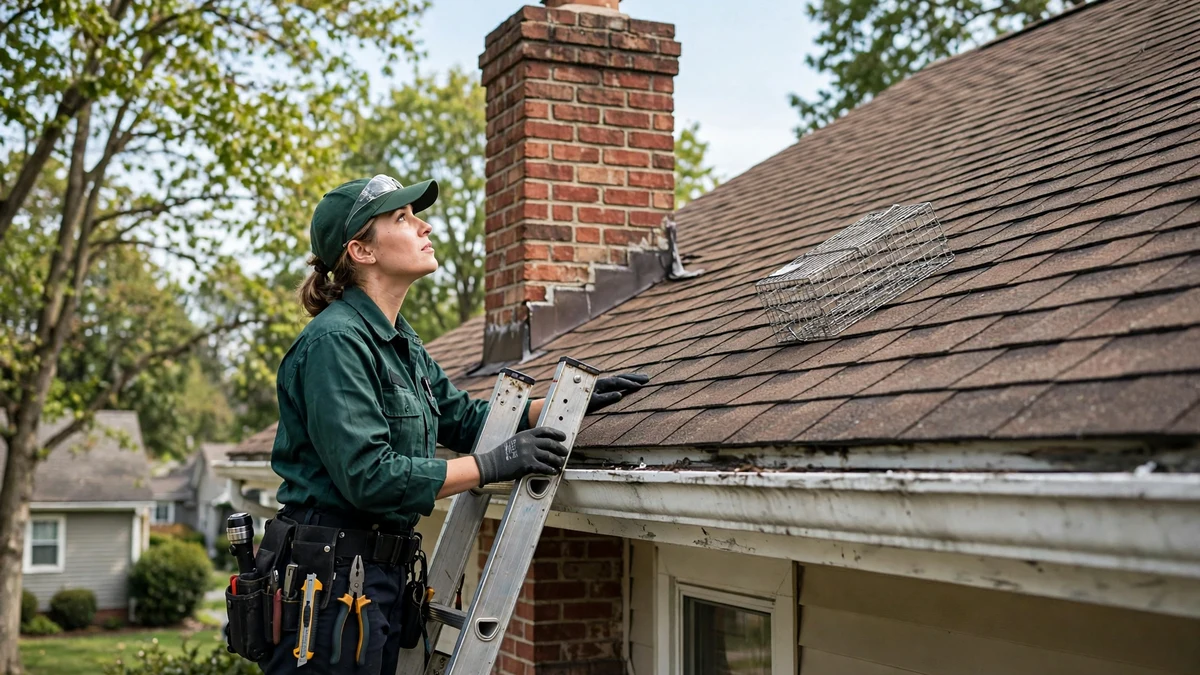
The battlefield's mature woods are a wildlife engine — squirrels, raccoons, opossums, and snakes range out of the park into surrounding neighborhoods. Branch-to-roof pathways are the classic entry. Our wildlife removal removes the animal humanely and seals the entry points, because the woods will keep sending replacements.
Mosquitoes near springs and low areas
Crawfish Springs and the wet low ground around it hold the standing water mosquitoes need. Yards near the springs and in low-lying pockets see the heaviest pressure. Our mosquito control surveys for breeding sources on your property first — the only approach that works near permanent water features.
Ticks in wooded yards
Leaf litter and shaded edges where lawns meet battlefield woods are tick habitat. Properties with wooded borders need a different treatment plan than open lots — we treat the harborage zones, not just the lawn.
Older homes with crawl spaces also see their share of rodents, carpenter ants, and moisture pests — all part of the same inspection.
What Pest Control Services Do You Offer in Chickamauga?
The full Dalton lineup, tuned for a historic battlefield town:
- Termite control — inspection, liquid barrier and bait options for early-1900s wood-frame homes.
- Termite inspections — the Georgia termite letter for Chickamauga home purchases.
- Wildlife removal — humane removal plus exclusion for squirrels, raccoons, snakes, and other battlefield-woods animals, including snake concerns.
- Mosquito control — breeding-source reduction and seasonal treatments for spring-fed and low-area yards.
- Rodent control — trapping, removal, and exclusion for crawl-space and attic invaders.
- Ant control — carpenter ants in mature lots, household species indoors.
- Cockroach control — American and smoky brown roaches in damp crawl spaces and sewers.
- Bed bug treatment — inspection-confirmed elimination with follow-up verification.
When Should Chickamauga Homeowners Schedule Service?
Spring (March–June) is termite swarm season — the single most important inspection window for historic-home owners, and the right time to book pre-purchase termite letters. Summer peaks mosquitoes near the springs and ticks in wooded yards. Fall (September–October) is the exclusion window: seal attics, rooflines, and crawl spaces before squirrels, raccoons, and mice move in for winter. Winter brings indoor rodent calls. The pattern is simple — inspect in spring, treat the yard in summer, seal in fall — and it fits Chickamauga's particular mix better than any generic schedule.
May carries a double load in Chickamauga: the tail of termite swarm season overlaps with the start of tick and mosquito pressure from the battlefield woods and spring-fed low areas. For historic-home buyers, May is also peak closing season — schedule the termite letter the week your contract is signed, not the week before closing, so there's time to address findings. And if your home sits near Crawfish Springs, May is when the springs-area moisture starts working on crawl spaces in earnest; a spring moisture check now prevents the summer's termite and carpenter ant invitations. Put the May visit on the calendar now and the rest of the year largely takes care of itself. Your crawl space will thank you — dry wood is uninteresting wood, as far as termites are concerned.
Which Chickamauga Areas Do You Serve?
We cover downtown Chickamauga, the Crawfish Springs area, the Highway 27 corridor through town, and the battlefield-adjacent roads and rural properties around the park boundary. If your property borders the National Military Park or sits on the roads between Chickamauga and Fort Oglethorpe or LaFayette, call +1 (647) 367-1424 and we will confirm coverage.
What Should You Do If You See a Snake?
Don't approach it — that's the whole first step. Around Chickamauga's battlefield woods and spring-fed areas, snakes follow the rodents, and that includes venomous species. Keep people and pets away, note exactly where you saw it and what it looked like, and call us. Our wildlife removal handles snake removal safely — identification, capture, and relocation away from the home. If you're seeing snakes regularly, the yard is telling you something: brush piles, woodpiles, tall grass against the foundation, and active rodent populations all draw snakes in. We'll advise on the yard conditions to change — clearing debris, trimming foundation plantings, addressing the rodents they're hunting — because removing the snake without removing the reasons it came just schedules the next one. For any snake you can't positively identify, treat it as dangerous until a professional confirms otherwise.
How Does Spring-Fed Moisture Affect Chickamauga Foundations?
Crawfish Springs doesn't just water the park — it feeds moisture into the ground across the surrounding area, and moisture is the quiet partner of nearly every foundation pest. Damp crawl spaces rot sill plates and floor joists, and decaying wood is exactly what subterranean termites and carpenter ants target first. The same moisture draws American cockroaches, silverfish, and other damp-loving pests into the crawl space and up into the house. During our termite control inspections in the springs area, we check crawl-space moisture conditions alongside the wood itself — because treating termites while ignoring the moisture that invited them is half a job. What helps: gutters that actually move water away from the foundation, grading that slopes away from the house, and crawl-space ventilation that isn't blocked by stored belongings. We'll note the moisture conditions we find in plain language and tell you which ones matter for pests and which are just damp.
Why Is the Crawl Space the Center of Older-Home Pest Problems?
Walk the crawl space of an early-1900s Chickamauga home and you'll read the property's whole pest history. Moisture from the spring-fed ground softens sill plates and floor joists — and softened wood is the first target for subterranean termites and carpenter ants. Old foundation vents, many with torn or missing screens, admit mice, rats, and the occasional opossum. Plumbing penetrations cut decades ago were never sealed, giving roaches and rodents interior highways. And because nobody goes down there, it all compounds quietly: a termite colony can feed for a long time before a single swarmer appears upstairs. Our termite control inspections treat the crawl space as the main event, not an afterthought — moisture conditions, wood-soil contact, vent screens, frass, mud tubes, droppings — documented with photos where they help. What homeowners can do: keep gutters discharging away from the foundation, don't stack firewood or belongings against crawl-space vents, and get the space on an inspection schedule instead of waiting for evidence upstairs. In Chickamauga's historic homes, the crawl space is where prevention happens.
How Do I Get Started?
Call +1 (647) 367-1424, message us on WhatsApp, or send the contact form. Tell us about the house — its age, the neighborhood, what you are seeing — and we will schedule an inspection. We document everything we find and give you a written plan in plain language. Historic homes deserve careful work, and that is what we bring. Need pest control in Dalton? Start at our homepage.
Nearby Areas We Also Serve
Based in Dalton, we run the same inspection-first pest control across the surrounding towns - including LaFayette, Rossville, Ringgold. If your town is not listed, contact us and we will confirm coverage for your address.