Call +1 (647) 367-1424 WhatsApp Us Request an Inspection
Termite control in Dalton, GA is the inspection, treatment, and ongoing monitoring of wood-destroying termite colonies around a home - and in Northwest Georgia, it is not optional maintenance. Dalton sits squarely in the termite belt, where mild winters, long humid summers, and moisture-holding clay soils keep Eastern subterranean termite colonies foraging nearly year-round. We are Dalton Pest Pros, and termites are the pest we take most seriously: a colony can hollow out structural wood for years before a homeowner notices a single sign.
In short: Most Dalton termite problems are Eastern subterranean termites entering from soil colonies. Professional treatment means an inspection first, then a liquid soil barrier, a bait system, or a combination of methods - followed by monitoring. This page walks through species, signs, methods, swarm timing, and cost factors exactly the way we work through them on a real job.
What Termites Threaten Dalton Homes?
Because nearly every termite job we see around Dalton involves subterranean species, identification starts underground - but not every termite in Georgia plays by the same rules. Species determines method: what eliminates a soil-nesting colony will not touch a drywood colony living entirely inside a door frame. Here are the four termites that matter in Northwest Georgia.
Eastern subterranean termites
The Eastern subterranean termite (Reticulitermes flavipes) is the default termite of Dalton and the one behind the vast majority of structural damage claims in Georgia. Colonies live in the soil - often hundreds of thousands to over a million workers - and forage outward through mud tubes to reach wood. They need constant contact with soil moisture, which is why crawl spaces, foundation perimeters, and plumbing penetrations are their front doors. If a Dalton home has termites, this species is the likely culprit until proven otherwise.
Dark southeastern subterranean termites
The dark southeastern subterranean termite (Reticulitermes virginicus) shares the Eastern subterranean's soil-dwelling habits and much of its range across the Southeast. In practice, the two behave similarly enough that treatment strategy rarely changes between them: both are controlled with soil barriers and bait systems targeting the colony in the ground. We mention it because accurate identification matters - and because Georgia's termite pressure comes from more than one native species.
Formosan termites in Georgia
Formosan termites (Coptotermes formosanus) are the aggressive outlier. Introduced to the Southeast decades ago, they have been reported in parts of Georgia, and their colonies can number in the millions - an order of magnitude larger than native subterranean colonies. Formosans can build carton nests above ground inside walls when moisture allows, which means they sometimes survive without soil contact. Their swarmers fly at dusk in late spring, unlike the daytime swarms of native species. Any suspected Formosan activity gets our most aggressive response because the damage curve is steeper.
Drywood termites
Drywood termites live entirely inside the wood they eat - no soil contact, no mud tubes. They are far less common in inland Northwest Georgia than along the coast, but they do show up, usually in furniture, attic framing, or trim. Their calling card is frass: six-sided fecal pellets kicked out of tiny kick-out holes. Drywood colonies are small, but because there is no soil colony to target, treatment is completely different - direct wood treatment or localized approaches rather than soil barriers.
What Are the Signs of Termites in Dalton Homes?
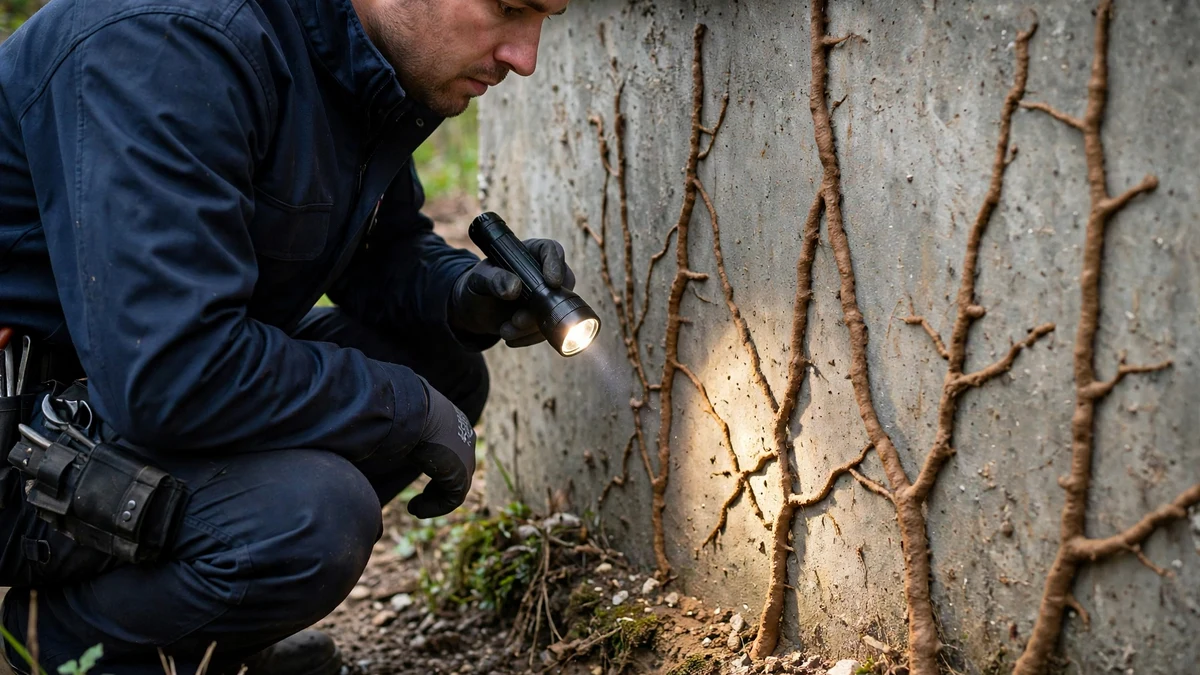
Termites are cryptic by design - the worker caste never sees daylight - so we read the signs they leave behind. Because subterranean termites are the most common species around Dalton, our inspections focus on soil-to-wood contact points first: foundation walls, crawl space piers, and anywhere wood meets the ground.
Mud tubes
Mud tubes are pencil-width tunnels of soil, wood particles, and termite saliva that subterranean termites build to travel between the colony and their food while staying moist and hidden. Look for them climbing foundation walls, spanning cracks in slabs, or hanging from floor joists in the crawl space. A tube the width of a pencil can carry thousands of foragers a day - and a broken tube that gets repaired within days is proof of an active colony.
Swarmers and discarded wings
Swarmers are the winged reproductive termites a mature colony releases to start new colonies. In Georgia, native subterranean swarmers typically fly on warm days from January through early June; Formosan swarmers fly at dusk from mid-May into early June. A swarm inside your home means a mature colony is in or directly under the structure. Even after the swarmers die, their discarded wings - all four the same size, unlike ants - piled on windowsills are a diagnostic clue. If you are unsure whether you saw termites or flying ants, that comparison walks through the differences.
Hollow or damaged wood
Subterranean termites eat wood from the inside out, following the grain and leaving a thin veneer of surface wood or paint intact. Tap suspect baseboards, window frames, and door frames with a screwdriver handle: a hollow papery sound where neighboring wood sounds solid is a red flag. Blistered or peeling paint that is not explained by moisture can be the surface over termite galleries just beneath.
Frass and other droppings
Frass is termite fecal matter, and its form identifies the species. Drywood termites push distinctive six-sided pellets out of kick-out holes, leaving tiny piles beneath infested wood. Subterranean termites do not produce visible frass piles the same way - their waste stays in the mud tubes and galleries. Either way, unexplained piles of what looks like sawdust or pepper near woodwork deserve a professional look. Our signs of termites in Georgia homes guide covers each of these clues with photos of what to look for.
In short: Mud tubes on the foundation, swarmers or equal-sized wings indoors, hollow-sounding wood, and frass piles are the four signs that separate a real termite problem from normal house settling. Any one of them justifies a professional termite inspection before the colony does another season of damage.
How Does Professional Termite Treatment Work?
Treatment without identification is guessing - so our process always starts with evidence, not product. Every termite job we take on in Dalton follows the same four steps, and the first one determines everything after it.
Step 1 - inspection and identification
We inspect the full structure: exterior foundation perimeter, crawl space or slab edge, interior woodwork, attic framing, and moisture-prone areas like bathrooms and laundry rooms. We are looking for active signs, species identification, and the three conditions conducive to infestation that Georgia's official inspection form tracks - more on those below. When a real-estate transaction is involved, this inspection produces the Official Georgia Wood Infestation Inspection Report, the state-defined "termite letter," rather than a generic checklist.
Step 2 - treatment plan
Species, colony location, infestation extent, and construction type shape the plan. A slab-on-grade ranch in Dalton gets a different approach than a 1960s brick home on a vented crawl space - the crawl space home has piers, plumbing penetrations, and subfloor access that change where product goes. We explain which method we recommend and why before any application happens.
Step 3 - application
Application follows the plan: trenching and treating soil along the foundation for liquid barriers, installing and baiting stations in the soil perimeter for bait systems, or direct wood treatments for drywood or localized activity. We work from the outside in where possible to minimize disruption inside your home, and we keep you informed at each stage of the visit.
Step 4 - monitoring
Termite control does not end the day we leave. Bait systems are checked on a schedule, barrier treatments are verified, and conducive conditions are re-assessed. Monitoring is what turns a one-time treatment into lasting protection - because in the termite belt, new colonies are always probing for entry.
Which Termite Treatment Method Is Right for Your Home?
No single method fits every home, so we compare the four approaches honestly - including what each one cannot do. The right choice depends on species, construction, and how the infestation was found.
| Method | How it works | Best for | Disruption | Follow-up needed |
|---|---|---|---|---|
| Liquid soil barrier | Termiticide applied in a continuous treated zone in the soil around the foundation; foraging termites contact it and carry effects back to the colony | Subterranean termites; homes with accessible soil perimeter; established infestations | Moderate - trenching along the foundation, drilling through slabs/patios where needed | Periodic re-inspection; barrier longevity depends on product, soil, and conditions |
| Bait systems | Stations installed in the soil around the home; termites feed on slow-acting bait and share it through the colony, collapsing it over weeks to months | Ongoing protection and monitoring; properties where trenching is impractical; sensitive sites | Low - small stations flush with the soil, no trenching | Yes - stations must be monitored and re-baited on schedule |
| Direct wood treatment | Borate or similar products applied directly to infested or at-risk wood (surface treatment, foam injection into galleries) | Drywood termites; localized subterranean activity in accessible wood; preventive treatment of exposed framing | Low to moderate - targeted to the infested wood | Re-inspection of treated areas |
| Moisture and conducive-condition correction | Fixing the conditions termites need: drainage, leaks, wood-to-soil contact, crawl space ventilation | Every termite job - supports and extends any chemical method; alone it rarely eliminates an established colony | Varies with the repair | Ongoing - conditions recur if maintenance lapses |
In short: Liquid barriers create a treated zone termites cannot cross without exposure; bait systems turn the colony's own foraging into its undoing but demand scheduled monitoring; wood treatments handle drywood and spot activity; and correcting moisture and wood-to-soil contact makes every other method work better. Most of our Dalton jobs combine at least two of these.
A note on the question we hear most: liquid barrier or bait stations - which is better? Neither is universally superior. Barriers act faster and suit established subterranean infestations with an accessible perimeter; bait systems suit long-term monitoring and properties where trenching is difficult. We recommend based on your home's construction and what the inspection found - not based on which product we prefer to sell.
When Is Termite Swarm Season in Georgia?
Georgia's termite swarm season is one of the longest in the country, which is both a warning and a diagnostic gift. Native subterranean termites typically swarm on warm, humid days from January through early June, usually in daylight after rain. Formosan termites swarm at dusk from mid-May into early June. Seeing a swarm is alarming, but it is also useful information: only mature colonies - usually three or more years old - produce swarmers, so a swarm means an established colony is in or very near the structure.
What a swarm means for you as a homeowner: do not panic, but do not ignore it either. Swarmers themselves do not eat wood - their job is to start new colonies - but their presence confirms reproductives are emerging from somewhere close. Note where you saw them, save a few in a jar if you can, and schedule an inspection. The worst response is spraying the swarmers and assuming the problem is solved; the colony that produced them is still underground, still feeding.
What Conditions Around Dalton Homes Attract Termites?
Termites do not choose homes at random - they follow moisture, food, and shelter, and Georgia's official inspection form tracks exactly three "conditions conducive to infestation." Because these three appear on the Official Georgia Wood Infestation Report, correcting them is both good prevention and good real-estate hygiene.
Moisture. Subterranean termites need constant moisture. Leaking hose bibs, AC condensate lines draining against the foundation, poor grading that ponds water at the slab, and plumbing leaks in crawl spaces all create the damp soil termites prefer. In our inspections, the wettest corner of the crawl space is very often the corner with mud tubes.
Wood-to-soil contact. Any untreated wood touching soil is a bridge straight past the foundation: deck posts set in soil, siding or stucco extending below grade, firewood stacked against the house, form boards left in place after construction, and heavy mulch piled against the foundation. We recommend pulling mulch back from the foundation and keeping a visible inspection gap at the slab edge.
Crawl space ventilation. Dalton has a large stock of mid-century homes on vented crawl spaces, and inadequate ventilation traps the humidity termites love. Blocked, painted-shut, or insufficient vents - plus missing or damaged vapor barriers - keep the subfloor environment damp year-round. Improving ventilation and drainage under the home is one of the highest-value termite prevention steps a homeowner can take.
What Affects the Cost of Termite Treatment?
We do not publish prices because honest termite pricing is per-job: two homes on the same street can need completely different work. What we can tell you - and what our cost estimator page explains in detail - are the factors that move the number. The size of the home's footprint and the linear footage of foundation to treat is the biggest driver. Foundation type matters: crawl space homes need pier and interior perimeter work that slab homes do not. The extent of the infestation, the method chosen (barrier, bait, or both), accessibility of the crawl space, and whether you add ongoing monitoring all factor in. When we quote, we walk the property first and show you exactly what drives the figure - ask us how we price our work and we will explain it for your home specifically.
Do You Need Ongoing Termite Protection in Georgia?
Georgia is in the termite belt, and that phrase is not marketing - it describes a climate where subterranean termite colonies stay active nearly year-round and where most residential lots host at least one colony in the soil. Treatment eliminates the colony attacking your home; it does not make your yard permanently termite-free. That is why ongoing protection exists: scheduled re-inspections, monitored bait stations, and re-treatment coverage if activity returns.
You will sometimes hear the term "termite bond." As an industry concept, a termite bond is a renewable agreement under which a pest control company provides ongoing inspections and re-treatment coverage, and some bond types include damage repair provisions. Bond terms vary widely between companies, so the honest move is to ask exactly what is covered, what triggers re-treatment, and what is excluded - in writing - before comparing. One more fact worth knowing: standard homeowner's insurance policies in the United States typically exclude termite damage, treating it as a preventable maintenance issue. That exclusion is exactly why prevention and monitoring carry real financial weight here.
Termite Control Across Dalton and Surrounding Towns
We provide termite inspection and treatment throughout Dalton and the surrounding Northwest Georgia communities - including Calhoun, Ringgold, and Chatsworth - and our full service area map covers the rest. If you found mud tubes, swarmers, or suspicious wood damage, the next step is a professional inspection: the colony will not wait, and neither should you. Call +1 (647) 367-1424, message us on WhatsApp, or request an inspection. And if you are comparing providers, start at our pest control in Dalton home page for the full picture of what we do.