Call +1 (647) 367-1424 WhatsApp Us Request an Inspection
Cockroach control in Dalton, GA is the identification, IPM-based elimination, and sanitation-driven prevention of the roach species that infest North Georgia homes - and it is the pest where the homeowner's partnership matters most. We are Dalton Pest Pros, and we are direct about this: German cockroaches do not leave because we sprayed; they leave because we combined inspection, baiting, growth regulators, and your sanitation into one plan that gives them nowhere to live.
In short: German roaches (kitchens, fast breeders), American "palmetto bug" roaches (sewers and crawl spaces), smoky browns, and brown-banded roaches each harbor differently and need different treatment. Professional elimination follows IPM - inspection, sanitation partnership, gel baiting, insect growth regulators, crack-and-crevice treatment, and monitoring. This page covers species identification, why roaches invade even clean homes, the full IPM process, German roach specifics, and prevention.
Which Cockroaches Invade Dalton Homes?
Because harborage determines treatment - the German roach in your dishwasher needs a different plan than the palmetto bug wandering in from the crawl space - we identify the species first. Four cockroaches matter in the Dalton area.
German cockroaches
The German cockroach (Blattella germanica) is the indoor specialist and the hardest to eliminate: light brown, about half an inch, with two dark parallel stripes behind the head. It lives in kitchens and bathrooms - behind refrigerators, under sinks, inside dishwasher and microwave voids, in cabinet hinges - anywhere warm, humid, and close to food and water. German roaches are the fastest breeders of the group, which is why a few seen becomes hundreds quickly, and why they get their own section below.
American cockroaches / palmetto bugs
The American cockroach (Periplaneta americana) - the "palmetto bug" - is the big one: reddish-brown, one to two inches, and a strong flier when warm. It lives in sewers, septic systems, crawl spaces, and basements, wandering indoors through drains and gaps. A single large roach in the bathroom at night is usually this species, and it usually came from below, not from a breeding population in your kitchen.
Smoky brown cockroaches
Smoky browns (Periplaneta fuliginosa) are dark mahogany, large, and strongly attracted to light. They live outdoors in mulch, tree holes, and woodpiles, entering attics and upper floors - often through attic vents - and are the species most associated with homes surrounded by heavy landscaping. If the big roaches are upstairs near lights, think smoky brown.
Brown-banded cockroaches
Brown-banded roaches (Supella longipalpa) are smaller, with distinctive light bands across their wings. Unlike Germans, they prefer drier areas - upper cabinets, behind picture frames, inside electronics and furniture - and they tolerate lower humidity. They spread through a home more diffusely, which changes the baiting pattern.
How Do You Tell Which Roach You Have?
Size, markings, location, and egg cases together name the species reliably. The table below is the reference we use - and if you are seeing small brown insects near the bed rather than the kitchen, check our Dalton bed bug treatment page first, because baby cockroaches and bed bugs are commonly confused.
| Species | Size | Markings | Where found | Egg case (ootheca) |
|---|---|---|---|---|
| German | ~1/2 inch | Two dark stripes behind head | Kitchens, bathrooms - warm appliance voids | Female carries it until near hatching |
| American / palmetto | 1-2 inches | Reddish-brown, pale margin on shield | Sewers, crawl spaces, basements, drains | Dark purse-shaped case, glued in hidden spots |
| Smoky brown | ~1.25 inches | Uniform dark mahogany | Outdoors, mulch, attics near lights | Similar to American, in protected voids |
| Brown-banded | ~1/2 inch | Light bands across wings | Dry areas - upper cabinets, electronics | Small, glued under furniture and in crevices |
Are Cockroaches Dangerous?
We keep this factual, because the real risks need no exaggeration. Cockroaches - especially German roaches - produce allergens in their frass, shed skins, and saliva that trigger asthma and allergies, with children in infested homes at particular risk; this is well documented by the EPA and public-health research. They contaminate food and food-contact surfaces mechanically, traveling from sewers, drains, and garbage to kitchens. What they are not: disease vectors in the epidemiological sense - cockroaches do not transmit illness the way mosquitoes transmit West Nile. The honest framing is contamination and allergens, and for sensitive individuals, those are serious enough.
Why Do Roaches Invade - Even Clean Homes?
"But my house is clean" is the sentence we hear most on roach calls, and the answer is that roaches need surprisingly little. A crumb behind the stove, a drip under the sink, the warmth behind the refrigerator - that is a complete habitat for German roaches. Beyond food, the invasion routes explain the rest: multi-unit buildings share roaches through wall voids and plumbing chases, so your neighbor's infestation becomes your sightings; American roaches travel up through sewer and drain connections, especially dried-out floor drains; and roaches hitchhike in used appliances, grocery bags, cardboard boxes, and secondhand furniture. Clean helps enormously - but clean alone, without addressing entries and harborages, does not stop them.
How Does Professional Roach Treatment Work?
Professional cockroach elimination follows IPM - integrated pest management - a sequence where each step makes the next one work. Broadcast spraying alone fails because it never reaches the harborages; the sequence below does.
- Inspection. We identify the species, map harborages with a flashlight (behind and under appliances, in cabinet voids, along pipe chases), and place monitoring traps to establish the population baseline.
- Sanitation plan. Together we define your part: the food, water, and clutter reductions the treatment needs. This is the partnership the next section explains - it is not optional.
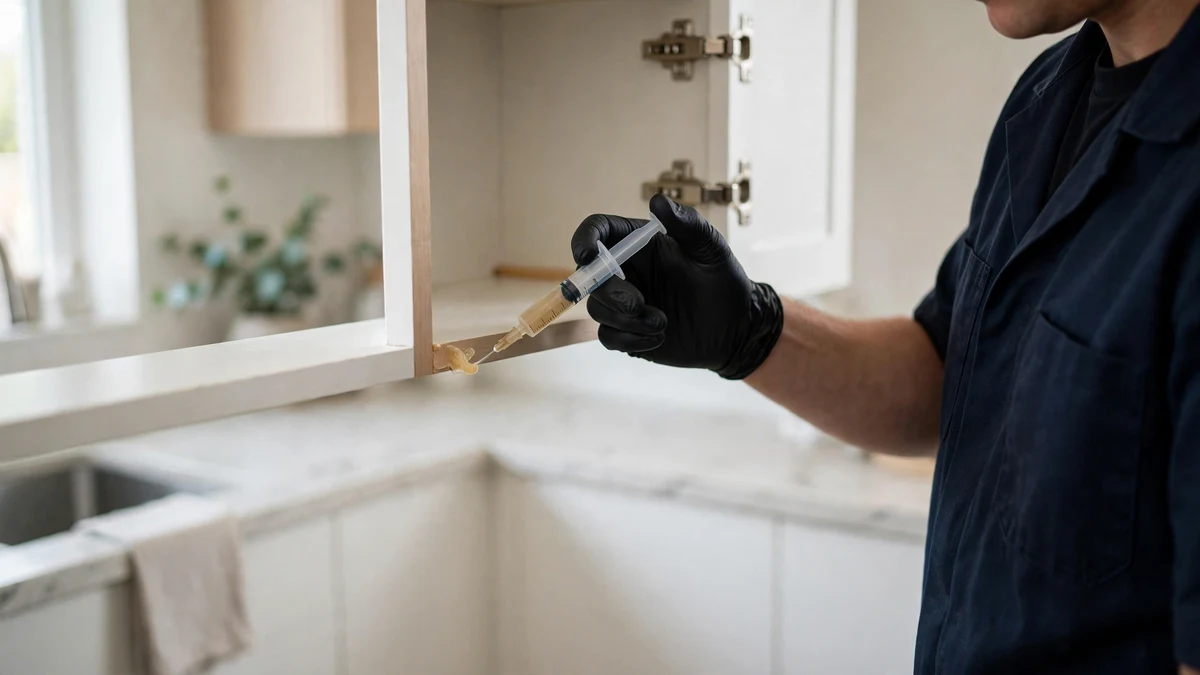
- Gel baiting. Professional gel baits placed as small dots in cracks, crevices, and harborage edges - where roaches travel, not where people see. Foragers feed and share the bait through the population.
- Insect growth regulators (IGRs). IGRs do not kill adults - they prevent nymphs from maturing and reproducing, breaking the breeding cycle. Combined with bait, this is what collapses a German roach population rather than just trimming it.
- Crack-and-crevice treatment. Targeted application into the voids roaches harbor in - behind baseboards, under sinks, around pipe penetrations - reaching where sprays never go.
- Monitoring. Sticky traps stay in place between visits, telling us objectively whether the population is falling and where stragglers remain.
In short: Inspect, sanitize together, bait the harborages, break the breeding cycle with IGRs, treat the cracks, and monitor. Skip the sanitation and the roaches outbreed the bait; skip the IGRs and the nymphs replace the adults. The sequence is the treatment.
Why Is German Roach Treatment Different?
German cockroaches earn their reputation as the hard one through sheer reproductive math: a female produces an egg case every few weeks, each hatching dozens of nymphs, and those nymphs mature in as little as two months in a warm kitchen. One unnoticed introduction becomes a visible infestation in a season and a heavy one not long after. That speed shapes everything: bait must be fresh and attractive enough to compete with the kitchen's food, placements must cover every harborage (miss one void and it reseeds the kitchen), and follow-up visits are non-negotiable - the schedule is set by the egg-hatch cycle, not by convenience.
Two more German-specific realities. Bait rotation: roach populations can develop aversion to a bait matrix over time, so professionals rotate bait formulations rather than reapplying the same product indefinitely - another reason DIY single-product approaches stall. Apartments: in multi-unit buildings, German roaches move through shared walls and plumbing chases, so treating one unit while the neighboring unit breeds is mopping with the tap running; effective apartment work coordinates across units. If your building has roaches, talk to management about building-wide treatment - individual heroics rarely hold.
What Do You Need to Do Before and After Treatment?
This is the partnership section, and we are candid: treatment fails without it. Before we arrive, declutter the kitchen and bathroom - clear counters, empty the cabinets we will treat (we will tell you which), and pull appliances you can safely move a few inches from the wall. Deep-clean the kitchen: behind and under the stove and refrigerator, inside the microwave vent, under the sink. Fix leaks - roaches need water daily, and a dripping trap sustains a population through the best baiting program. Bag and seal open food; empty trash.
After treatment, keep it up: the sanitation level you reach before the visit is the level that lets the bait win. And critically, do not apply over-the-counter roach sprays between our visits. Repellent sprays drive roaches away from our bait placements and contaminate the bait itself - the single most common way customers accidentally sabotage their own treatment. If you see roaches after treatment, that is expected for a period (see the flushing FAQ below) - call us rather than reaching for a can. Our preparing your home for treatment guide covers the general checklist for any pest visit.
How Do You Keep Roaches From Coming Back?
Elimination resets the clock; prevention keeps it reset. Exclusion: seal gaps around pipes, caulk cracks in kitchens and bathrooms, and repair damaged screens - the same entry discipline as our rodent control work, scaled to roach-sized gaps. Moisture control: fix leaks promptly and ventilate damp areas; German roaches cluster around water. Garbage management: lidded cans, taken out on schedule, with the area underneath kept clean. Drain maintenance: cover floor drains, run water in unused drains to keep traps sealed - dry traps are American roach highways from the sewer. Incoming goods: inspect grocery bags, cardboard boxes, and especially used appliances and furniture before they enter; the dishwasher you got secondhand may have come with tenants.
Finally, stay vigilant after success: German roach populations rebound fast if sanitation slips, so keep the habits that won - sealed food, fixed leaks, clutter-free counters - as permanent routine rather than a one-time push.
What Affects the Cost of Cockroach Treatment?
We quote per job after inspection, because roach jobs span from a single palmetto bug entry to a heavy German infestation across a multi-unit building. The factors: which species and how extensive the infestation is, the size of the home, the sanitation starting point (heavy clutter and chronic moisture mean more preparation and more visits), and how many follow-up visits the breeding cycle demands. Our cost estimator page explains how we build the quote - and why the cheapest roach quote is usually the one that skips the follow-ups the biology requires.
Cockroach Control Across Dalton and Whitfield County
We treat cockroaches throughout Dalton and Whitfield County - including Calhoun, Ringgold, and LaFayette - with our full service area covering the rest. If roaches are in your kitchen, do not wait for the population math to run - call +1 (647) 367-1424, message us on WhatsApp, or schedule a visit. For the full picture of our pest control in Dalton, GA, start at the home page.