Bed bugs are among the few pests where when you find them matters as much as whether you find them. A single mated female can lay hundreds of eggs in her lifetime, and each generation compounds the last. What starts as a few hitchhikers from a hotel or a used chair becomes a severe, multi-room infestation in roughly six to eight weeks. The entire game is early detection — and the evidence is there to find, if you know what it looks like.
In short: the most reliable early sign of bed bugs is not bites — it is tiny dark fecal spots along mattress seams and bed frames. Check within about eight feet of where you sleep with a flashlight, looking for spots, shed skins, and live apple-seed-sized bugs. Only a live bug (or professional confirmation) proves an infestation; bites alone never do.
Why Does Early Detection Matter So Much?
Because bed bug populations grow exponentially, the cost and difficulty of treatment scale with time, not linearly but steeply. A small, localized introduction — a few bugs in one mattress seam — is a contained problem a professional can resolve efficiently. Eight weeks later, that same introduction can mean bugs in the box spring, the headboard, the nightstands, the baseboards, and the room next door.
The math is simple and unforgiving: a single fed female lays hundreds of eggs over her life, eggs hatch in roughly a week or two under room temperatures, and the new nymphs feed, molt, and breed in turn. There is no plateau where an infestation "levels off" on its own — without intervention, it only grows and spreads. Finding the first fecal spots this week instead of the first live bugs next month is the highest-value pest control action a homeowner can take.
What Are the 6 Early Signs of Bed Bugs?
Because different signs appear at different stages, learn all six — the earliest ones let you act weeks before the later ones show up.
1. Bite marks — with a major caveat
Bed bug bites often appear as small red welts in lines or clusters on exposed skin, typically after sleeping. Here is the caveat the Michigan Department of Health and Human Services stresses: bite reactions vary enormously between people, and some people do not react at all. You can be fed on nightly and never show a mark. Bites are a reason to inspect — never a diagnosis on their own.
2. Fecal spotting — the most reliable early sign
Tiny dark spots — digested blood — that look like someone dotted the surface with a fine-tip marker. You will find them clustered along mattress seams, in screw holes, and along the edges of box springs. Unlike bites, fecal spots are objective evidence: rub one with a damp cloth and it smears reddish-brown. This is the sign professionals look for first, because it appears before populations are large enough to spot live bugs easily.
3. Shed skins
Bed bug nymphs molt five times as they grow, leaving behind translucent, empty exoskeletons — tiny amber husks shaped exactly like bed bugs. Skins accumulate in harborage areas (seams, cracks, behind headboards) and persist long after the bug that shed them has moved on, making them excellent historical evidence of activity.
4. Blood smears
Small rusty smears on sheets or pillowcases, usually from a fed bug crushed during sleep. A single smear means little on its own — it happens — but smears appearing repeatedly alongside other signs strengthen the case considerably.
5. Live bugs — the apple-seed ID
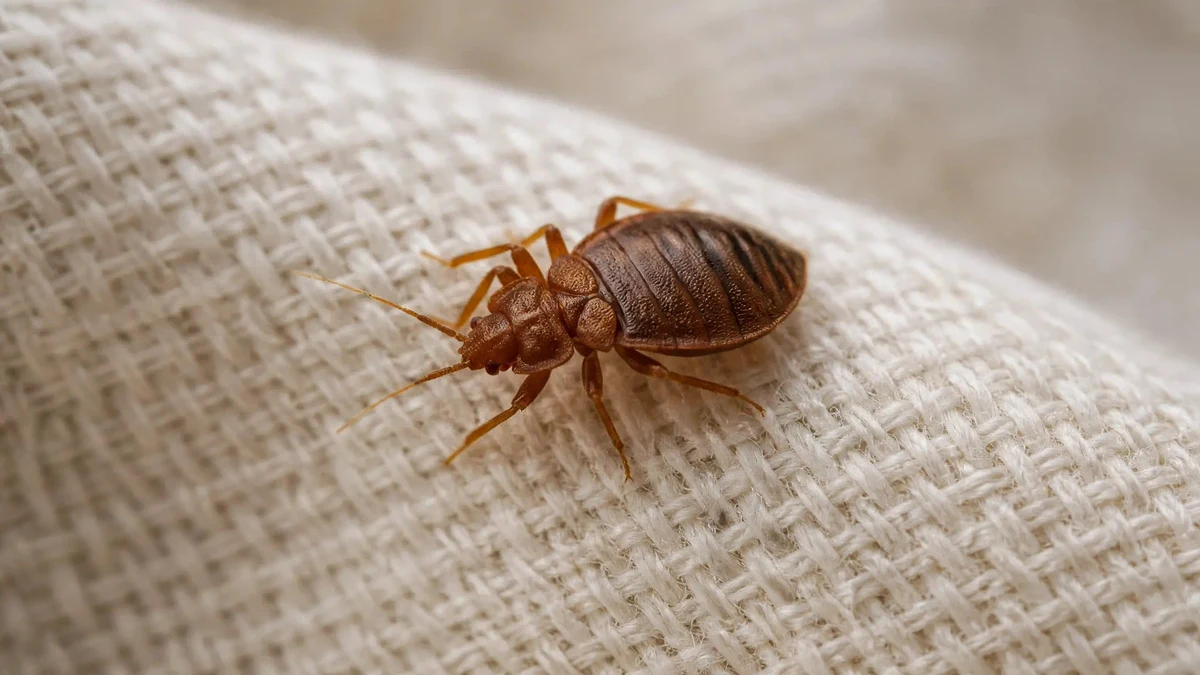
An adult bed bug is about the size and shape of an apple seed: flat, oval, reddish-brown, wingless. Nymphs are smaller and paler, nearly translucent when unfed. Only a live bug (or a professional's confirmation of the other signs) definitively proves an infestation — which is why the inspection method below matters so much.
6. Musty odor — a late sign only
Heavy infestations can produce a sweet, musty odor from the bugs' scent glands. Treat this as a late-stage indicator: if you can smell bed bugs, the population is already large. Never wait for an odor to act — by the time it appears, early detection has already failed.
Where Should You Look for Bed Bugs?
Because bed bugs are nest parasites that feed on sleeping people, roughly 70–80% of any infestation sits within about eight feet of the bed — the CDC's practical rule of thumb for where to concentrate your search. Work outward from the sleeping surface in this order:
Mattress seams and piping come first — run your fingers (or a credit card) along every seam, tuft, and fold, watching for spots and skins. Then the box spring, especially the underside and its seams; the headboard, front and back, including screw holes and joints; nightstands (drawers out, joints and undersides); baseboards behind and beside the bed; and finally luggage racks, upholstered chairs, and curtains near the bed. Check the far side of the bed too — bugs do not respect "your side."
How Do You Inspect for Bed Bugs?
Because bed bugs are nocturnal hiders the size of apple seeds, a proper inspection is a method, not a glance. You need a bright flashlight and, ideally, a magnifying glass or your phone's macro camera. Work in daylight or with room lights on plus the flashlight — the angled beam reveals spots, skins, and bugs hiding in seams and cracks that overhead light washes out.
Go seam by seam: pull the sheets back, lift the mattress edge, and examine every fold with the flashlight held low and close. Flip the box spring if you can. Unscrew or peer behind the headboard. Empty nightstand drawers and check their joints. The whole routine takes twenty to thirty minutes for one bed — and it is the same routine professionals use, just slower and more thorough.
The hotel version: Dalton sits on the I-75 corridor, and travel is the number-one way bed bugs arrive. In any hotel room, leave your luggage in the bathroom (tile, no hiding places) while you inspect: pull back the bedding at the head of the bed, check the mattress seams and headboard with your phone flashlight, and glance at the nightstand and luggage rack. Two minutes of inspection beats two months of infestation. Our guide to how bed bugs spread covers the travel protocol in detail.
Spotted something on this list? bed bug treatment in Dalton starts with a professional inspection — we will tell you plainly what we find and what it takes to fix it.
What Does NOT Prove You Have Bed Bugs?
Because anxiety fills evidence gaps fast, here is what does not confirm bed bugs — starting with the big one. Bites alone prove nothing. Mosquitoes, fleas, chiggers, and skin conditions all produce similar marks, and as noted, some people never react to bed bug bites at all. Michigan public-health guidance is explicit: only finding a live bug (or a professional confirming the physical signs) confirms an infestation.
Be skeptical of the "breakfast, lunch, and dinner" pattern — three bites in a row — as a diagnostic. It is a memorable phrase, not a medical test; many biting pests feed in clusters. Likewise, a single blood smear, one mysterious welt after a trip, or a musty smell in an old room are each reasons to inspect, not conclusions. Inspect first, conclude from evidence, and call a professional when the evidence points to bed bugs rather than spiraling on symptoms alone.
What Should You Do If You Find Signs?
Because the worst thing you can do with bed bugs is help them move, your first moves are about containment. Do not drag the mattress to another room, do not move infested furniture through the house, and do not start spraying store-bought repellents — repellents scatter bed bugs into wall voids and adjacent rooms, turning a contained problem into a distributed one.
Do photograph everything: close-ups of the spots, skins, or bugs, plus wider shots showing where in the room you found them. Bag any live specimens you can catch. Then call for a professional inspection — bed bug treatment in Dalton starts with confirming the infestation and mapping its extent, because the treatment plan for one seam is very different from the plan for three rooms. Before the visit, our home preparation checklist covers the bed-bug-specific prep (high-heat laundry, bed isolation) that makes treatment work better. For context on what drives the scope of the job, see our pest control cost factors guide.
Early Detection Checklist
Because a checklist beats memory, run this tonight — it takes under half an hour:
- Strip the bed and examine every mattress seam, tuft, and fold with a flashlight held low and close.
- Check the box spring — seams, underside, and corners — for dark fecal spots and shed skins.
- Inspect the headboard front and back, including screw holes and joints where it meets the wall.
- Empty and check nightstands, looking inside drawers and along joints and undersides.
- Examine baseboards behind and beside the bed for spots, skins, or live bugs.
- Look for live bugs last: flat, oval, apple-seed-sized, reddish-brown — only a live bug (or pro confirmation) proves it.
Found something on the list? Do not move infested items between rooms, do not spray, and photograph what you found. Then get a professional confirmation — early action is the entire advantage.
Ready for a straight answer about your home? bed bug treatment in Dalton — call, message, or request a free estimate and we will take it from there.